Buying a property in New South Wales is exciting, but it also involves several legal and financial steps before ownership officially transfers to you.
If you’re wondering what happens after your offer is accepted, this guide explains the NSW conveyancing process from start to finish. Whether you’re a first-home buyer or an experienced investor, understanding each stage can help you avoid delays and make informed decisions.
What Is Conveyancing?
Conveyancing is the legal process of transferring ownership of a property from the seller to the buyer.
A licensed conveyancer manages the legal documentation, property searches, settlement process, and communication with all parties involved to ensure the transaction is completed correctly.
How Long Does Conveyancing Take in NSW?
In most cases, the conveyancing process takes 6 to 8 weeks, although the timeframe can vary depending on the contract, finance approval, and any unexpected delays.
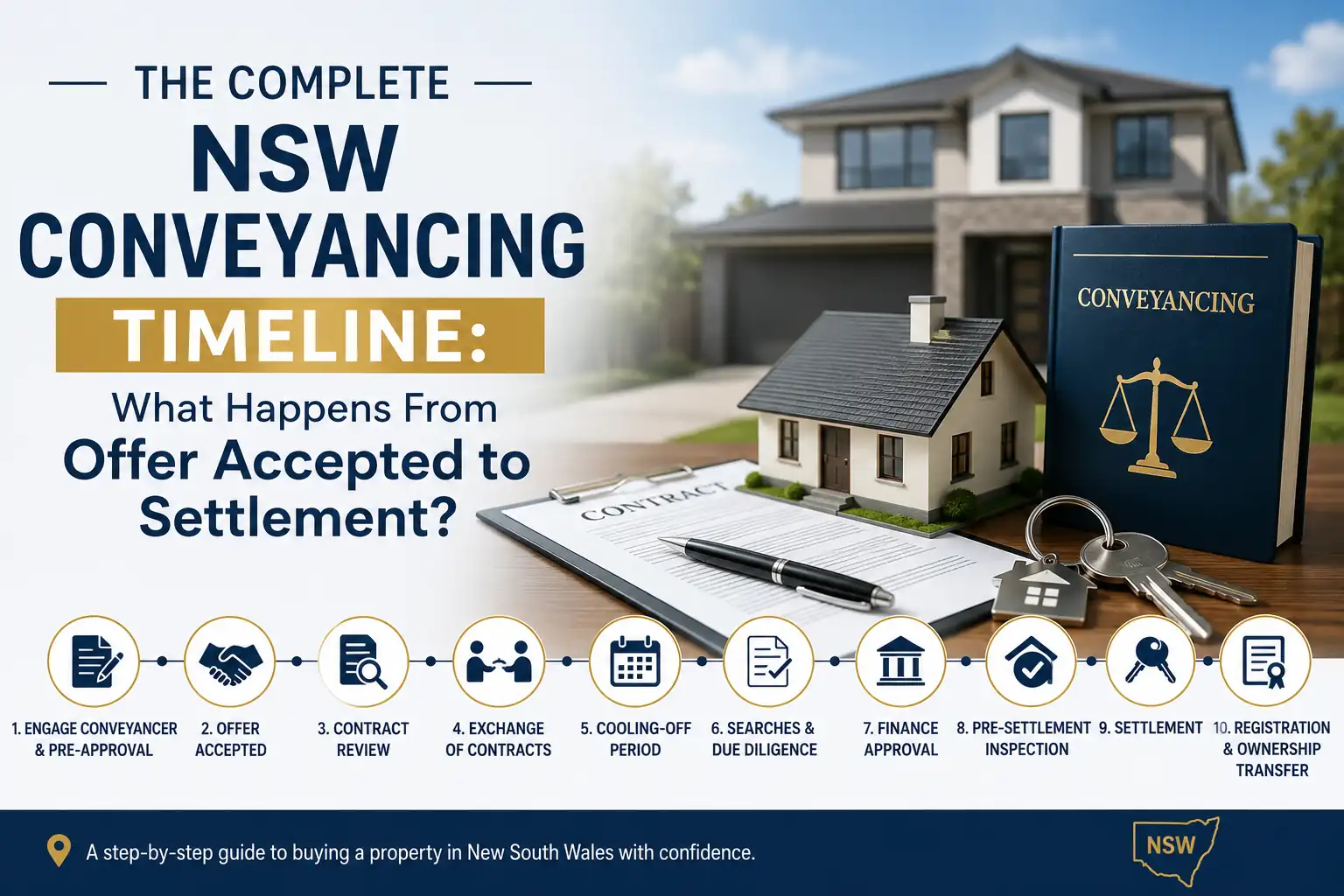
NSW Conveyancing Timeline
Step 1: Engage a Conveyancer and Obtain Pre-Approval.
The first step you should take before making an offer is to engage a conveyancer and obtain your pre-approval.
You will need to complete your conveyancers’ onboarding processes, sign initial documents and they will need to open a file to prepare themselves to assist you with your purchase. Should you engage a conveyancer after you have signed a contract or after you have had an offer accepted, it may delay the process, put a lot of pressure and stress on you and potentially even cost you the property or thousands of dollars.
Obtaining a pre-approval is an essential step in your property purchase journey, it will give you confidence in your budget, what you can spend and save you time later in the process when applying for your unconditional loan approval.
Step 2: Your Offer Is Accepted
Once the seller accepts your offer, speak to your conveyancer for the next steps as they can differ depending on the contract and circumstances of the property. The property is not taken off the market until contracts have been formally exchanged (buyer and seller sign, deposit paid and contract is dated)
What happens during this stage?
- The Contract of Sale is provided.
- Your conveyancer reviews the contract.
- Any concerns or special conditions are discussed before signing.
Step 3: Contract Review
Before you sign anything, your conveyancer will carefully review the contract.
They check for issues such as:
- Easements
- Restrictions on the land
- Council approvals
- Special conditions
- Settlement terms
- Property disclosures
This review helps identify legal risks before you become legally committed.
Step 4: Exchange of Contracts
When both parties sign identical contracts, they are exchanged.
At this stage:
- The buyer pays the deposit.
- The buyer signs the contract.
- The seller signs the contract.
- The contract is dated.
- The transaction becomes legally binding.
- The agreed settlement period begins.
Step 5: Cooling-Off Period (If Applicable)
For many residential purchases in NSW, buyers receive a cooling-off period after exchanging contracts.
This period is your opportunity to complete any and all of your due diligence including but not limited to obtaining unconditional loan approval, negotiation of the contract’s terms and conditions, pest, building and strata (if applicable) reports as well as any other due diligence that is important to you such as distance to amenities, schools, friends, family and work.
During this time, buyers can withdraw from the purchase under certain conditions, although financial penalties may apply.
Not every property transaction includes a cooling-off period, so always confirm your contractual rights with your conveyancer before signing.
Step 6: Property Searches and Due Diligence
Your conveyancer conducts a range of searches to uncover any legal or financial issues affecting the property.
These may include:
- Title searches
- Council searches
- Water authority searches
- Land tax checks
- Planning certificates
These searches help ensure there are no hidden surprises before settlement.
Step 7: Pre-Settlement Inspection
Under the standard contract in NSW, you are entitled to a final inspection in the 3 days leading up to settlement.
The inspection confirms that:
- The property is in the agreed condition.
- Included fixtures remain in place.
- Any agreed repairs have been completed.
If problems are discovered, your conveyancer can advise on the appropriate next steps.
Step 8: Settlement Day
Settlement is the day legal ownership officially transfers to the buyer.
On settlement day:
- The balance of the purchase price is paid.
- Legal ownership is transferred.
- The lender registers their mortgage against the property title.The buyer receives confirmation that settlement has been completed.
Once settlement is successful, your conveyancer will contact you and from there you can collect the keys from the selling agent.
Common Reasons Conveyancing Can Be Delayed
Although many transactions proceed smoothly, delays can happen.
Common causes include:
- Finance approval taking longer than expected
- Missing contract documents
- Outstanding property searches
- Errors in legal paperwork
- Settlement funds not arriving on time
- Issues identified during the final inspection
Working with an experienced conveyancer helps minimise these risks.
Frequently Asked Questions
Do I need a conveyancer before making an offer?
While it’s not legally required, engaging a conveyancer before signing a Contract of Sale allows you to identify potential risks early and make informed decisions.
Can settlement happen earlier than expected?
Yes. If both parties agree and finance is ready, settlement may occur before the original settlement date.
What happens if settlement is delayed?
Depending on the reason, settlement may be postponed. In some situations, financial penalties or additional legal obligations may apply under the contract.
Can I inspect the property before settlement?
Yes. Buyers usually complete a final inspection shortly before settlement to ensure the property remains in the agreed condition.
Is conveyancing different for apartments?
Yes. Apartment purchases often involve additional strata documentation, financial records, and building reports that should be reviewed before settlement.
Why Professional Conveyancing Matters
Property transactions involve significant legal and financial responsibilities.
A qualified conveyancer helps protect your interests by reviewing contracts, completing essential searches, managing legal documentation, coordinating with lenders, and ensuring settlement proceeds as smoothly as possible.
Professional guidance reduces the risk of unexpected issues and gives buyers confidence throughout the entire process.
Final Thoughts
Understanding the NSW conveyancing timeline helps buyers prepare for every stage of the property purchase.
From reviewing the Contract of Sale to completing settlement, each step plays an important role in protecting your investment and ensuring a successful property transaction.
If you’re buying property in NSW, working with an experienced conveyancer can make the process simpler, more efficient, and far less stressful.
Need Help With Your NSW Property Purchase?
Whether you’re buying your first home, upgrading, or investing, the team at Strictly Conveyancing can guide you through every stage of the conveyancing process, from contract review to settlement, with clear advice and professional support.