Buying a property in NSW is about more than checking the house, land size and purchase price. You also need to understand what legal rights or restrictions are attached to the property.
One of the things that can appear on a property title is an easement.
An easement gives another person, property owner, organisation or authority certain rights to use part of your land for a specific purpose. You still own the land, but your use of that particular area may be affected by the rights created by the easement.
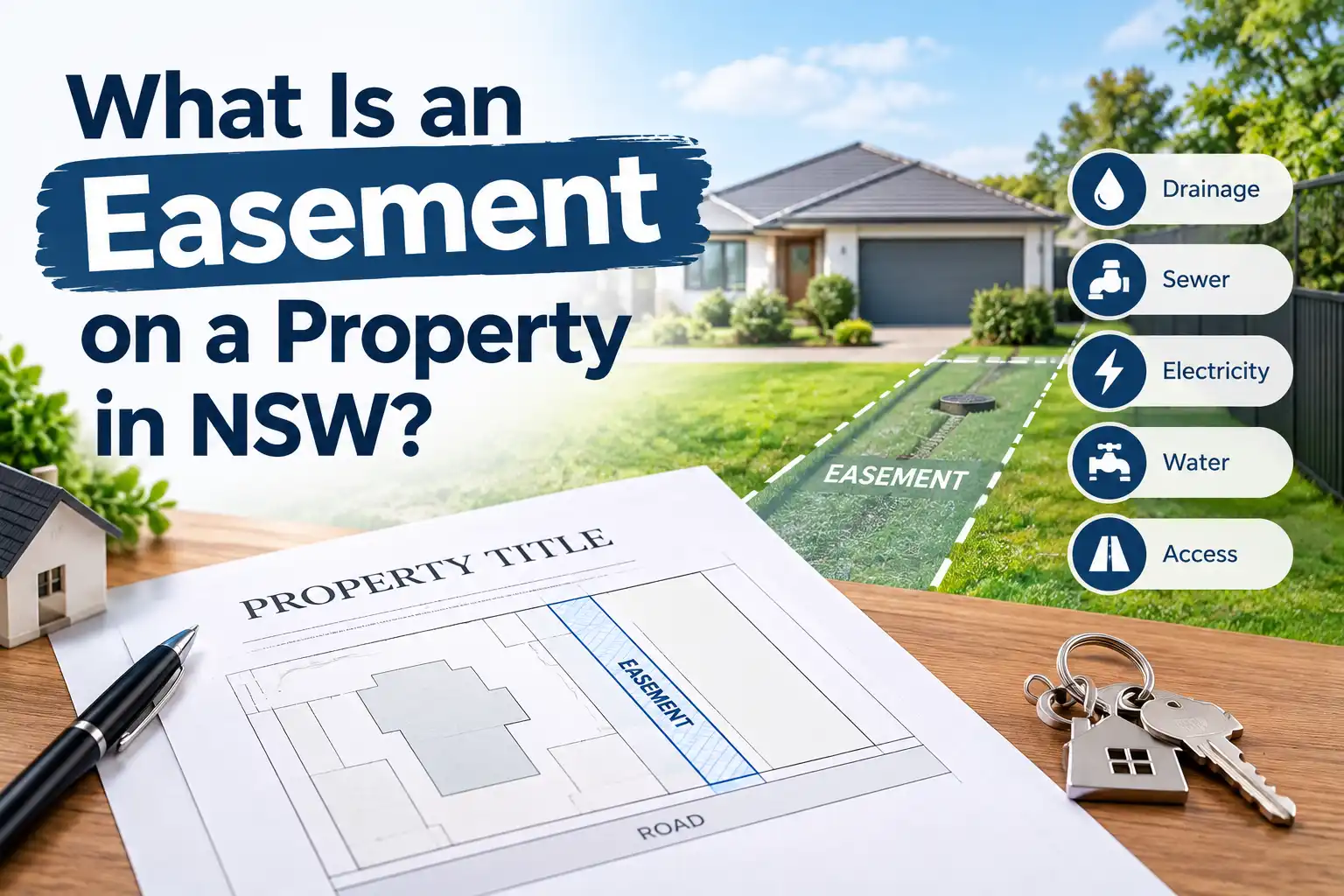
Easements are common in NSW. They can relate to drainage, sewer pipes, access, electricity, water, stormwater or other services. Some may have very little practical impact on your everyday use of the property, while others can affect where you can build, extend or make changes.
If you are buying a property, understanding an easement before you exchange contracts can help you avoid unexpected problems later.
What is an easement?
An easement is a legal right attached to land that allows someone else to use or access part of a property for a particular purpose.
For example, imagine you buy a house with a large backyard. A sewer pipe runs underneath one section of the yard, and a registered easement gives the relevant authority or another property owner rights relating to that infrastructure.
You still own the land above the pipe. However, the easement may place restrictions on what you can do in that area.
An easement does not normally mean that someone else owns that part of your property. Instead, it creates a specific right or restriction connected with the land.
NSW Government information describes easements as interests in land that can provide rights such as access or use for infrastructure. Easements may be used for services including electricity, water, sewerage and drainage.
Why are easements created?
Easements are generally created because a property or infrastructure needs access to land that is owned by someone else.
Common reasons include:
- Providing access to another property
- Allowing drainage infrastructure to cross a property
- Protecting sewer or water infrastructure
- Allowing electricity infrastructure to operate
- Providing a right of way
- Allowing stormwater to pass through land
- Supporting shared services between neighbouring properties
For example, a property at the back of a block may need access through another property to reach a public road. A registered right-of-way easement can provide that access.
Similarly, several neighbouring properties may rely on a shared drainage system. A drainage easement can establish rights relating to the infrastructure.
What are the different types of easements in NSW?
The exact rights created by an easement depend on the wording of the relevant document. This is why you should not assume that every easement has the same effect.
1. Right of way easement
A right of way allows a person or property owner to pass over part of another property.
This is often relevant where a property does not have direct access to a public road.
A right of way could involve:
- Vehicles
- Pedestrians
- Shared driveways
- Access to another property
If you are buying a property affected by a right of way, you should understand who can use it and what access rights they have.
2. Drainage easement
A drainage easement may allow stormwater or other drainage infrastructure to pass through a property.
These easements are common in residential areas, particularly where several properties share drainage infrastructure.
A drainage easement can become important if you are planning to build a garage, extension, pool or other structure over the affected area.
3. Sewer easement
A sewer easement may protect underground sewer infrastructure.
The easement can give the relevant authority rights relating to the sewer infrastructure and access for maintenance or other purposes.
Before planning substantial construction near a sewer easement, you should understand the restrictions that apply.
4. Utility easement
Utility infrastructure such as electricity, water or telecommunications may require rights over private land.
The specific terms of the easement will determine what can be done within the affected area and who has rights under it.
5. Access easement
An access easement provides a legal right to access a particular part of the property or another property.
This can be especially important when buying rural or semi-rural property, where access arrangements can be more complicated.
NSW Government guidance for rural property buyers specifically recommends checking for easements and rights of way because access by others can affect your rights as the property owner.
How do you know if a property has an easement?
An easement can usually be identified through the property’s title and associated documents.
When buying a property in NSW, the contract of sale includes title-related information and dealings recorded on title. NSW Government guidance for sellers specifically identifies easements among the dealings that may be recorded with the title documents.
A proper conveyancing review can help identify:
- Whether an easement affects the property
- The location of the easement
- The type of easement
- Who has the benefit of the easement
- What rights are created
- What restrictions may apply
- Whether the easement could affect your intended use of the property
The important point is that the word “easement” alone does not tell you the full story. The actual terms and location need to be considered.
Where can you find an easement on the title?
An easement may be recorded in the property’s title information and related registered documents.
The title may identify the dealing or instrument associated with the easement. The document itself can provide more detail about the rights and obligations involved.
For example, a title might indicate that an easement exists, but you may need to review the associated dealing to understand exactly what the easement allows.
This is one reason why simply looking at a property listing or walking around the property is not enough when assessing potential legal issues.
Does an easement mean you cannot use that part of your property?
Not necessarily.
An easement does not automatically mean the affected part of your land is unusable.
The practical effect depends on the terms of the easement.
For example, you may still be able to:
- Maintain a lawn
- Plant suitable landscaping
- Use part of the area for normal outdoor activities
However, certain construction or permanent structures may not be permitted or may require approval.
This is why buyers should look at the specific terms of the easement rather than making assumptions.
Can you build over an easement in NSW?
This is one of the most important questions buyers ask.
The answer depends on the type of easement, its terms, the proposed development and any relevant approval requirements.
You should not assume that you can build over an easement simply because the area looks suitable for construction.
For example, if an easement protects sewer or drainage infrastructure, construction in that area may create problems with access, maintenance or infrastructure protection.
If you are considering buying a property because you want to:
- Build an extension
- Add a garage
- Install a swimming pool
- Build a granny flat
- Add a driveway
- Construct another structure
check the easement before committing to the purchase.
A conveyancer can help you understand the legal documents, but you may also need advice from the relevant council, utility provider, engineer, surveyor or other qualified professional depending on what you plan to build.
Can an easement affect the value of a property?
It can, but there is no simple rule that an easement automatically reduces a property’s value.
The impact depends on factors such as:
- The size of the affected area
- The location of the easement
- The type of easement
- The rights given to another party
- Whether access is required
- Whether infrastructure is located underneath the land
- Whether the easement restricts development
- The property’s overall layout
- Your intended use of the property
For example, an easement running through a small part of a large backyard may have little practical effect.
On the other hand, an easement running through the only suitable area for a proposed extension could be much more significant.
The key question is not simply “Does this property have an easement?”
The better question is:
“How does this particular easement affect the way I intend to use the property?”
Can you buy a property with an easement?
Yes. Having an easement does not automatically make a property unsuitable for purchase.
Many properties in NSW have easements, and some have little impact on normal residential use.
The important thing is to understand the easement before you become legally committed to the purchase.
Before exchanging contracts, consider:
- What type of easement exists?
- Where is it located?
- Who benefits from it?
- What rights does it create?
- What restrictions apply?
- Does it affect your planned renovations?
- Could it affect future development?
- Is there any infrastructure within the easement?
- Are there maintenance or access obligations?
- Does anything in the easement create a concern for your intended use?
A professional contract review can help you identify issues that may not be obvious from a standard property inspection.
Can an easement be removed?
In some circumstances, an easement may be released or modified, but this is not something a property owner can simply remove because they no longer want it.
The process depends on the nature of the easement, the parties involved and the legal basis on which it was created.
Where an easement benefits another property owner, that owner’s rights may need to be considered. Other parties, including authorities or infrastructure providers, may also have rights depending on the circumstances.
The NSW Conveyancing Act provides mechanisms concerning the creation, release and modification of certain easements.
If you want to remove or change an existing easement, obtain professional advice before taking action.
What should buyers check before purchasing a property with an easement?
If an easement appears during your conveyancing review, do not ignore it.
Work through these questions before exchanging contracts.
Check the title
Confirm that an easement is registered and identify the relevant dealing or instrument.
Check the deposited plan
The plan can help you understand where the easement sits in relation to the property boundaries.
Read the easement terms
The wording matters. It can explain the rights, responsibilities and restrictions associated with the easement.
Consider your future plans
If you want to renovate or develop the property, check whether the easement could interfere with those plans.
Check access rights
If another person or property has a right of access, understand how that access works and which part of the property is affected.
Check infrastructure
If the easement relates to drainage, sewerage, water or other infrastructure, understand what infrastructure is located there and who may have rights to access it.
Ask questions before exchange
If you do not understand an easement, ask your conveyancer to explain its practical effect before you sign and exchange the contract.
What happens if you discover an easement after buying?
This can be a difficult situation, particularly if you planned to develop the affected part of the property.
A registered easement generally does not disappear simply because the buyer was unaware of it.
This is why property due diligence matters before exchange.
NSW Government guidance recommends obtaining and carefully reviewing the contract before making an offer, including title documents and other property information.
If you have already purchased a property and discovered an easement you did not understand, speak with a qualified conveyancer or property lawyer about the specific circumstances.
Does every easement cause a problem?
No.
This is an important distinction.
An easement is not automatically a defect or a reason to walk away from a property.
Some easements have minimal impact on how a property is used. Others can have a significant effect, particularly where they restrict construction, affect access or give another party important rights over part of the land.
The right approach is to assess the specific easement and its practical consequences.
Example: How an easement could affect a home buyer
Imagine you find a three-bedroom house with a large backyard. You plan to purchase the property and build a granny flat in the future.
During the conveyancing review, an easement is identified across the rear portion of the land.
At first, this may not seem important.
However, if the proposed granny flat would need to be built within or close to the affected area, the easement could become an important issue.
Instead of discovering the problem after settlement, the buyer can investigate it before exchanging contracts.
This is exactly why title and contract review should be part of your property due diligence.
Are easements common in NSW?
Yes. Easements are a normal part of the property system and are used for a range of access and infrastructure purposes.
They are particularly relevant where properties share services, require access through neighbouring land or have infrastructure crossing private property.
Their existence alone should not alarm a buyer.
What matters is understanding what the easement allows, where it is located and how it affects your plans for the property.
Easement vs right of way: what’s the difference?
A right of way is a type of easement.
An easement is the broader legal concept. A right of way generally gives someone a right to pass over another person’s land.
For example, if a neighbouring property owner needs to drive across part of your property to reach their land, that access may be protected by a right-of-way easement.
So, while people often use the terms separately, a right of way can exist as a specific type of easement.
Should you ask a conveyancer to check an easement?
Yes, particularly if you are buying a property and an easement appears on the title or contract documents.
A conveyancer can review the relevant property documents and explain issues that may affect the transaction.
At Strictly Conveyancing, the purpose of reviewing the contract and title information is not simply to identify technical terms. It is to help buyers understand issues that could affect their property purchase and intended use.
If an easement raises a development, access or infrastructure concern, your conveyancer can also advise when additional information or specialist advice may be appropriate.
Frequently Asked Questions
Is an easement bad for a property?
Not necessarily. Many easements have little effect on everyday property use. The impact depends on the type, location and terms of the easement.
Does an easement mean someone else owns part of my property?
No. An easement generally gives another party a particular right over land while ownership remains with the property owner.
Can I sell a property with an easement?
Yes. Properties with registered easements can be sold. The easement generally remains relevant to the property and should be properly dealt with in the sale documentation.
Can I build a house extension over an easement?
It depends on the easement and the proposed work. You should check the relevant documents and obtain appropriate advice before planning construction over an affected area.
Can an easement affect my property value?
It can, depending on its location, purpose and impact on the property’s use or development potential. An easement that significantly restricts a property’s practical use may be more important than one located in an area with little development potential.
How do I find out if a property has an easement?
Start by reviewing the property’s title and associated documents, including relevant dealings and plans. A conveyancer can help identify and explain registered easements during the conveyancing process.
Can I remove an easement from my property?
Sometimes an easement can be released or modified, but this depends on the circumstances and the rights of the parties involved. It should not be assumed that an easement can simply be removed by the property owner.
Final thoughts
An easement is not necessarily a reason to avoid buying a property.
The important thing is to understand exactly what the easement means for the property you are considering.
Before exchanging contracts, check the title, relevant plans and easement documents. If you have renovation or development plans, consider those plans alongside the easement rather than dealing with the issue after settlement.
A careful conveyancing review can help you identify these issues early and make a more informed decision about your purchase.
If you are buying or selling property in NSW and want help reviewing the contract and title information, Strictly Conveyancing can assist with the conveyancing process and help you understand issues that may affect your transaction.
This article provides general information about easements and conveyancing in NSW. It is not a substitute for legal advice about a specific property or transaction. Easement rights and restrictions can vary depending on the registered documents and circumstances of the property.