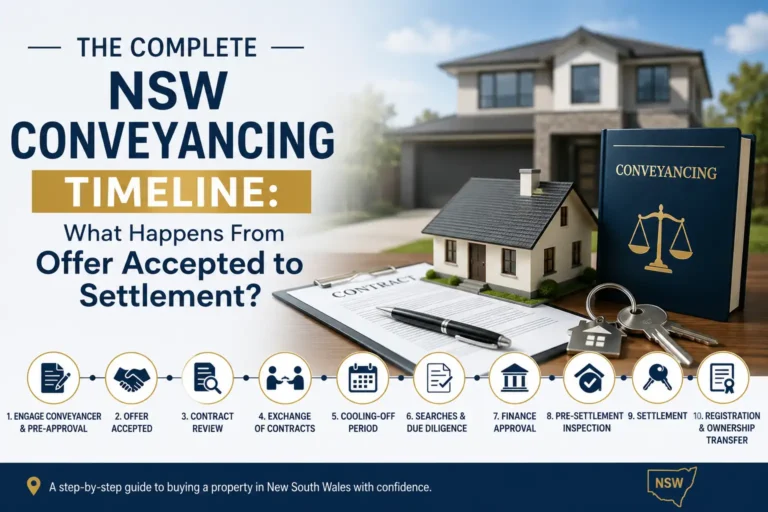

Buying a home is one of the biggest decisions you will ever make, and for many people in New South Wales, it can feel overwhelming. The process of purchasing property involves many steps, legal requirements, strict deadlines, and significant financial commitments. Without the right guidance, it is easy to feel stressed or make costly mistakes.
With careful preparation and the right professional support, you can move through each stage with confidence. First-time buyers and those purchasing their next home can make smarter choices and avoid common pitfalls by understanding the process in advance.
Preparing to Buy
Before you start looking at houses, preparation is key. The first step is setting a clear budget. Do not focus solely on the purchase price. In NSW, there are additional costs that many people overlook. These include stamp duty, lender fees, building and pest inspections, and insurance. A conveyancer can help you understand these costs early, so there are no surprises later.
It is also wise to secure pre-approval from your lender. Pre-approval gives you a clear idea of how much you can borrow and shows sellers that you are serious. This can make your offer stronger if you find the right property.
Next, think carefully about location. Research different suburbs by looking at transport options, school catchments, nearby amenities, and future development plans. If you are considering areas in and around Sydney, Parramatta, or Penrith, visit at different times of the day to get a true feel for traffic, noise, lifestyle, and safety.
Finally, start assembling your professional team. At a minimum, you should have a conveyancer and a mortgage broker. A good conveyancer will handle all the legal paperwork, explain your rights, keep track of important deadlines, and make sure nothing is missed. A mortgage broker can help you compare loans and secure finance that fits your circumstances.
Searching for the Right Property

Once your budget and pre-approval are sorted, the search begins. Real estate platforms are useful, but attending open homes and auctions in person is unparalleled. Seeing properties with your own eyes will give you a clearer sense of the market.
During this stage, be diligent. Do not just focus on the house or unit itself. Check recent sales in the area to make sure the asking price is fair. If you are looking at strata properties, review the strata report for any ongoing issues. Arrange a building and pest inspection so you know about potential structural concerns before making an offer.
The search phase can take weeks or even months. Patience will pay off.
Making an Offer
When you are ready to buy, you first need to understand how the property is being sold. In NSW, this is usually by private treaty or auction.
In a private treaty sale, you can negotiate directly with the seller or their agent. Offers are normally made in writing and based on recent sales. Having pre-approval in place strengthens your position and shows the seller you are serious. If your offer is accepted, you usually get a five-business-day cooling-off period, unless you waive it. This allows time for checks and inspections, but withdrawing will cost you a small portion of your deposit.
At an auction, there is no cooling-off period. Once the hammer falls, you are legally bound to buy the property and pay the deposit, typically 10%, on the spot. This is why it is vital to have your conveyancer review the contract and to make sure your finance is ready before auction day.
Exchange of Contracts
The exchange of contracts is one of the most important stages in buying property. This is when the buyer and seller each sign a copy of the contract, and the deposit is paid, usually 10% of the purchase price. From this moment, the sale becomes legally binding.
Your conveyancer will carefully review the contract beforehand, explain any conditions, check that all legal requirements are met, and make sure your interests are protected. They may request amendments, such as adjusting the settlement date or adding special conditions. The contract will also confirm details like inclusions, settlement terms, property boundaries, and any restrictions on the title.
Once contracts are exchanged, you are legally committed to the purchase. Pulling out after this point can result in serious financial loss, which is why having a conveyancer review everything before you sign is essential.
Pre Settlement Phase
The period between exchange and settlement is often busy. During this time, you need to finalise your loan, arrange building and contents insurance, organise utilities, and prepare for moving. It is also important to carry out a final inspection of the property to check that it is in the same condition as when you exchanged contracts and that agreed inclusions are still in place.
Behind the scenes, your conveyancer will coordinate with your lender and the seller’s conveyancer. They handle tasks such as checking title details, confirming there are no outstanding debts on the property, calculating settlement figures, and arranging stamp duty payments. These steps ensure everything is accurate and ready for settlement day.
Settlement Day
Settlement is the day when legal ownership of the property officially transfers to you. Your lender pays the balance of the purchase price, your conveyancer makes sure all legal documents are lodged, and any adjustments for council rates or water are finalised. Once this is done, the seller receives their funds and the keys are released to you.
In NSW, most settlements now take place electronically through PEXA, which makes the process faster, safer, less prone to error, and easier to track in real time. You usually do not need to attend in person, as your conveyancer manages everything on your behalf. If any last-minute issues arise, such as banking delays, your conveyancer will work to resolve them quickly. Once they confirm settlement is complete, you can collect your keys from the agent and move into your new home.
After Settlement
Even after moving in, there are important tasks to complete. You will need to notify utility providers, financial institutions, and service companies of your new ownership. It is also wise to update your address on official records such as the electoral roll, driver’s licence, insurance policies, and bank accounts.
This is also a good stage to review your finances. Set up a budget for ongoing costs such as council rates, water, maintenance, and insurance. Many buyers also set up direct debits to avoid missing payments.
Common Pitfalls to Avoid
Many buyers in NSW fall into similar traps. Some individuals rush into an offer without arranging inspections or thoroughly reviewing the contract. Others underestimate the true costs of buying, such as stamp duty, insurance, ongoing fees, and moving expenses, which can lead to financial stress. A common mistake is also trying to manage the legal process without a conveyancer, which can expose you to serious risks.
Other pitfalls include failing to get full loan approval before making an offer or not allowing enough time for settlement. By slowing down, asking questions, and relying on expert advice, you can avoid these issues and move forward with confidence.
How a Conveyancer Helps
A conveyancer is more than just a paperwork manager. They simplify the process, explain complex terms in plain English, check that every legal requirement is met, and keep you on track with important deadlines. They also handle key tasks like reviewing the contract, arranging stamp duty payment, ensuring the title is clear of debts or restrictions, and coordinating settlement with the lender and the seller’s conveyancer.
If any disputes or unexpected issues arise, such as errors in settlement figures or questions about inclusions, your conveyancer will know how to resolve them quickly. Having this professional support ensures the transaction runs smoothly and gives you confidence at every stage of the home buying journey.
Conclusion
Buying a home in NSW can feel complicated at first, but with preparation and the right team, it becomes manageable. From setting a budget and securing pre-approval, through to final settlement, each step matters. Understanding the process helps you avoid mistakes and gives you confidence as you make one of the biggest decisions of your life.
If you are looking to buy property in New South Wales, our team at Strictly Conveyancing is here to help. Contact us today to make your home purchase simple and stress-free.
Frequently Asked Questions
How long does it take to buy a home in NSW?
It usually takes 8 to 12 weeks from offer to settlement. The search stage can be longer, but once contracts are exchanged, settlement is normally 4 to 6 weeks.
Can first home buyers get any help in NSW?
Yes. First home buyers may access grants and stamp duty concessions through state and federal schemes. Eligibility depends on your circumstances.
What happens on settlement day in NSW?
Your lender pays the balance, your conveyancer finalises documents, and ownership transfers. Once complete, you receive the keys.
Can I withdraw after signing a contract?
With a private treaty, you can withdraw during the cooling-off period, but you will lose part of your deposit. After that, or at auction, you are legally bound.
What happens if my finance is delayed before settlement?
If the finance is late, you risk penalties or losing the property. A conveyancer may negotiate an extension, but it is not guaranteed.