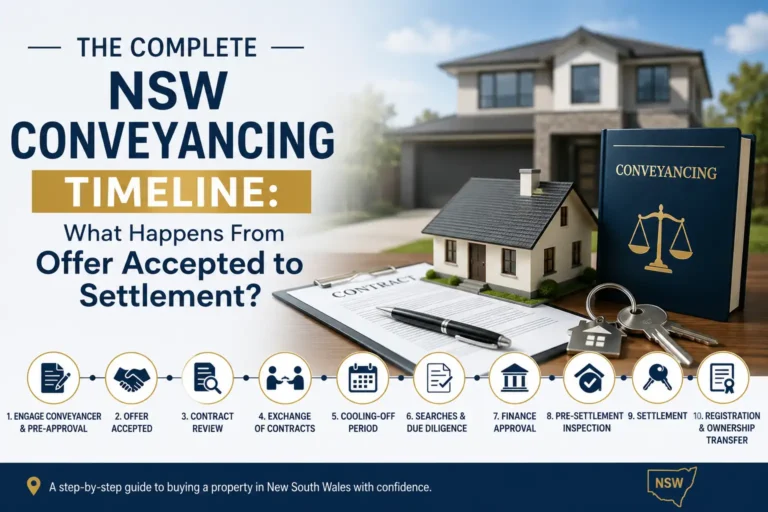
Settlement is the stage of buying or selling a home that most people look forward to, but it is also the part that can feel the most confusing. If you have been wondering what happens at settlement in NSW, you are not alone. Many buyers and sellers are unsure what settlement actually involves, who is doing what behind the scenes, when they will finally get the keys or receive their sale proceeds or what could delay settlement at the last minute.
Settlement is when the remaining money is paid, ownership is legally transferred, the sale is completed and the property officially changes hands. Understanding the steps involved can help you feel more prepared, avoid delays, know exactly what to expect on settlement day and stay in control from exchange through to settlement.
What Does “Settlement” Mean in NSW Property Conveyancing?
In NSW conveyancing, settlement is the final stage of a property sale, during which the legal ownership of the property is transferred from the seller to the buyer.
At settlement, the buyer pays the remaining purchase price and the seller transfers ownership. Once the settlement is completed, the buyer becomes the new legal owner of the property, and the sale is officially complete.
Settlement does not usually happen in person. In most cases, neither the buyer nor the seller attends. Instead, the buyer’s and seller’s conveyancers or solicitors work with the banks and settlement platform to complete the legal and financial steps on the agreed settlement date.
If you are buying, settlement is the day you finally get the keys and can move in, provided everything has been arranged properly. If you are selling, settlement is the day you receive the proceeds of the sale, after any mortgage and costs are paid out.
What Happens at Settlement in NSW? (Simple Breakdown)
So, what happens at settlement in NSW, in a simple step-by-step way? 
Settlement is a coordinated process in which money, legal documents, property ownership and the final handover of the sale are handled in the proper order.
Here is what usually happens at settlement:
The Buyer’s Loan Funds Are Provided (If They Have a Home Loan)
If the buyer is using a bank loan, their lender will provide the borrowed funds needed to complete the purchase. The buyer will usually have already paid a deposit at exchange, so the loan is for the remaining balance.
The lender will only release funds when:
- The loan is formally approved.
- All loan documents are signed.
- The buyer has met any lender conditions.
- The buyer has arranged insurance if the bank requires it.
The Buyer Pays the Remaining Balance
The buyer pays the remaining purchase price. This includes the portion of the purchase price not covered by the deposit and loan (known as the shortfall funds).
The buyer may also need to cover other amounts at settlement, depending on the property and contract, such as:
- Council rate adjustments.
- Water rate adjustments.
- NSW Land Registry Services fees.
- Stamp duty.
- Strata levies if it is a unit or townhouse.
The Seller’s Mortgage Is Paid Out (If the Seller Has One)
If the seller still has a mortgage on the property, the seller’s bank needs to be paid out at settlement so the mortgage can be removed from the title.
This is called a discharge of mortgage, and it is one of the major reasons timing matters. The seller’s lender must be ready and able to release the property so that the buyer can become the registered owner.
Adjustments Are Finalised and Paid
Adjustments are common in NSW settlements. They are used to make sure the buyer and seller pay their fair share of property costs based on the settlement date.
Adjustments may include:
- Council rates.
- Water rates.
- Strata levies.
- Land tax in some situations.
For example, if the seller has already paid council rates for a period that extends past settlement day, the buyer may need to reimburse the seller for the portion after settlement.
Transfer Documents Are Signed and Lodged
Settlement includes legal documents that transfer ownership, including the transfer document and any mortgage documents.
In NSW, settlements are often completed electronically, meaning documents are lodged online rather than handed over in person.
Stamp Duty Is Handled
In NSW, the buyer is responsible for stamp duty, also called transfer duty. This must be paid to transfer the title properly.
Your conveyancer will guide you on when and how the duty needs to be paid. This step is important because delays in duty payment can delay settlement.
The Buyer Becomes the New Owner
Once the settlement has successfully completed, the property ownership is transferred and recorded. The buyer is now legally the owner of the property.
At this point:
- The seller no longer owns the property.
- The buyer’s name is registered on the title.
- The buyer’s lender’s mortgage is registered if it exists.
The Keys Are Released to the Buyer
After confirmation that the settlement has completed, the real estate agent will be authorised to release the keys to the buyer.
This is often the moment people look forward to most, but it is important to understand that it only happens once the settlement is confirmed.
Who Is Involved in the Settlement?
Even though a settlement feels personal, there are usually several parties involved behind the scenes. Understanding who does what can help you feel more confident and reduce confusion.
The Buyer
The buyer’s job is to:
- Organise their finances on time.
- Pay the deposit at the exchange.
- Provide any extra funds needed before settlement.
- Complete final inspections.
- Follow any instructions from their conveyancer and lender.
The Seller
The seller’s job is to:
- Make sure they can legally sell the property.
- Arrange discharge of mortgage if needed.
- Leave the property in the agreed condition.
- Be ready to hand over vacant possession if required.
The Buyer’s Conveyancer or Solicitor
The buyer’s conveyancer manages the legal side of buying, including:
- Reviewing the contract and explaining it clearly.
- Completing searches and checks.
- Liaising with the lender.
- Preparing settlement figures.
- Coordinating settlement.
- Confirming settlement completion.
The Seller’s Conveyancer or Solicitor
The seller’s conveyancer manages the legal side of selling, including:
- Preparing and issuing the contract for sale.
- Managing communication with the buyer’s representative.
- Coordinating the discharge of the mortgage.
- Preparing settlement adjustments.
- Completing settlement steps for the seller.
The Buyer’s Bank or Lender
If the buyer has a home loan, the lender needs to:
- Approve the loan.
- Prepare loan documents.
- Organise settlement funds.
- Make sure mortgage registration is completed.
The Seller’s Bank or Lender
The seller’s lender is involved if a mortgage needs to be discharged. They must:
- Provide a payout figure.
- Be ready to receive funds.
- Confirm the mortgage can be released.
The Real Estate Agent
The agent usually handles:
- Holding the keys until settlement.
- Arranging access for inspections.
- Confirming when the settlement has completed.
- Releasing the keys to the buyer once the settlement is confirmed.
When Does Settlement Usually Happen?
The settlement date is usually agreed in the contract, and both parties must work towards being ready by that date.
In NSW, settlement is often set for around six weeks after exchange, but it can vary.
Some settlements happen sooner, and some take longer, depending on:
- Whether the buyer needs finance.
- Whether the seller needs more time to move out.
- Whether there are tenants involved.
- Whether there are special contract conditions.
The most important thing is that the settlement date is not a rough estimate. It is a contractual deadline.
What Can Delay Settlement?
Delays can happen even when everyone is trying their best. Settlement in NSW depends on many moving parts, and sometimes one delay can affect everything.
Here are common reasons a settlement can be delayed.
Loan Approval Is Not Finalised in Time
A common issue is when the buyer’s finance is not fully ready, such as:
- The loan approval is taking longer than expected.
- The buyer has not signed the documents quickly enough.
- The bank needs extra documents from the buyer.
- The bank requires insurance details.
The Seller’s Mortgage Discharge Is Delayed
Mortgage discharge delays are very common. The seller’s lender may take time to:
- Issue the payout figure.
- Process discharge paperwork.
- Confirm everything is ready.
Mistakes in Legal Documents
Small errors can cause major delays, including:
- Incorrect names.
- Incorrect property details.
- Figures not matching.
- Missing signatures.
Adjustments are not finalised
Adjustments need accurate information, especially for:
- Strata levies.
- Water usage.
- Council rates.
If the numbers cannot be confirmed, final settlement figures may be delayed.]
Problems Found During the Final Inspection
Buyers usually conduct a final inspection shortly before settlement to ensure the property is in the agreed condition.
Settlement can be delayed if:
- The property is not vacant when it should be.
- There is damage that was not there before.
- Fixtures or inclusions are missing.
- Rubbish has been left behind.
Other Unexpected Issues Before Settlement
Changes such as:
- A request to change the settlement date
- Banking issues
- A missing payment
What Should Buyers Do Before Settlement?
Buyers often feel unsure about what to do between exchange and settlement. The truth is, the smoother settlement usually belongs to the buyer who stays organised and responds quickly.
Here are the key steps buyers should take before settlement day.
Finalise Finance Early
Do not assume your bank will handle everything quickly. Make sure you:
- Return loan documents as soon as possible.
- Ask your bank what its settlement requirements are.
- Provide any documents they request straight away.
Make Sure Your Funds Are Ready
You may need to pay funds beyond the deposit, such as:
- Your contribution to the purchase price.
- Adjustments.
- Stamp duty.
- Conveyancing costs.
Your conveyancer will provide figures, but it is your job to transfer funds on time.
Arrange Building Insurance If Required
Even if insurance is not legally required before settlement, many lenders require it.
It is a good idea to arrange insurance early, so you are not scrambling at the last minute.
Book Your Final Inspection
A final inspection is usually done shortly before settlement, often within the last week or two.
During the inspection, check:
- The property condition is the same as at the exchange.
- Inclusions are still there.
- There is no unexpected damage.
- The property is vacant if it should be.
Confirm Key Collection Arrangements
Keys are usually collected from the real estate agent.
Ask:
- When will the keys be available.
- Where to pick them up.
- What identification is needed.
Stay Responsive
When settlement is approaching, you may receive calls or emails asking for urgent confirmation or documents. Quick replies can prevent delays.
What Should Sellers Do Before Settlement?
Sellers also need to be organised, especially if they have a mortgage or are trying to line up their move.
Here is what sellers should do.
Arrange Discharge of Mortgage Early
If you have a mortgage, do not leave this to the last minute.
Your bank may need time to process discharge documents, and delays here can hold up the entire settlement.
Prepare the Property for Handover
The property should be:
- In the same condition as when contracts were exchanged.
- Clean and clear unless agreed otherwise.
- Vacant if vacant possession is part of the contract.
Confirm What is Included
Make sure you leave behind any inclusions listed in the contract, such as:
- Curtains or blinds.
- Appliances.
- Light fittings.
Removing something that is listed as an inclusion can lead to disputes.
Keep Communication Open
Sellers should respond quickly to their conveyancer if asked to sign documents or confirm details. Slow responses can lead to delays.
Do You Get the Keys on Settlement Day?
In most NSW property purchases, yes, the buyer usually gets the keys on settlement day.
However, it depends on the settlement completing successfully.
The usual process is:
- Settlement is confirmed as complete.
- The seller’s representative confirms they have received funds.
- The real estate agent is notified.
- Keys are released to the buyer.
A key release can happen quickly after settlement, but sometimes it may take a little time, depending on the agent’s processes.
If you are planning removalists or moving in on settlement day, it is wise to allow for delays and not book anything too early in the morning.
Is Settlement the Same as Exchange?
No, exchange and settlement are not the same and mixing them up is very common.
What is exchange?
Exchange occurs when the contract becomes legally binding after both parties sign. This is often when the deposit is paid. In many NSW transactions, exchange is the point where the property is secured by the buyer, subject to the contract terms.
What is a Settlement?
Settlement is when the sale is completed. Money is paid, legal ownership is transferred, the paperwork is finalised and the keys can be released.
A simple way to remember it is:
- Exchange is committing to the deal
- Settlement is finishing the deal
Frequently Asked Questions About Settlement in NSW
How long does settlement take in NSW?
Settlement time varies, but it is typically around 6 weeks after the exchange. Some settlements occur sooner, while others take longer, depending on financing, property type and contract terms.
Do I need to attend the settlement in person?
In most cases, no. Settlement is usually handled by your conveyancer, the other party’s representative, and the banks.
Can settlement be delayed?
Yes. Settlement can be delayed for many reasons, including financial delays, discharge delays, or document issues. Your conveyancer will work to manage delays and keep things moving.
What happens if the settlement is delayed?
If the settlement is delayed, the parties may need to negotiate a new date. In some cases, penalties may apply depending on the contract and reasons for delay. This is why it is important to prepare early and stay in close contact with your conveyancer.
Can I move in on settlement day?
Usually yes, but only after settlement is complete and keys have been released. It is safer to plan a move later in the day, not early in the morning.
What is adjusted at settlement?
Adjustments commonly include council rates, water rates, and strata levies. These adjustments ensure the buyer and seller each pay their respective shares up to and after the settlement date.
Settlement Does Not Need to Be Stressful
Settlement is the final step that brings everything together. It is when the money is paid, legal ownership changes hands, the sale becomes final and the buyer can finally collect the keys. When you understand what happens at settlement in NSW, it becomes much easier to feel prepared, confident, in control, and ready for what comes next.
If you are buying or selling property in NSW and you want a smooth settlement with clear guidance, Strictly Conveyancing can help. We will guide you from exchange through to settlement and help you avoid delays, confusion, last-minute stress, and costly mistakes.